Sudan's transition from three decades of Bashir's rule promised hope in the civilian governance. Following the 2019 revolution driven by remarkable civic mobilisation, led to a power-sharing arrangement between the Forces of Freedom and Change and the military that appeared, for a brief period, to offer a credible path toward democratic consolidation. That promise has been comprehensively broken.
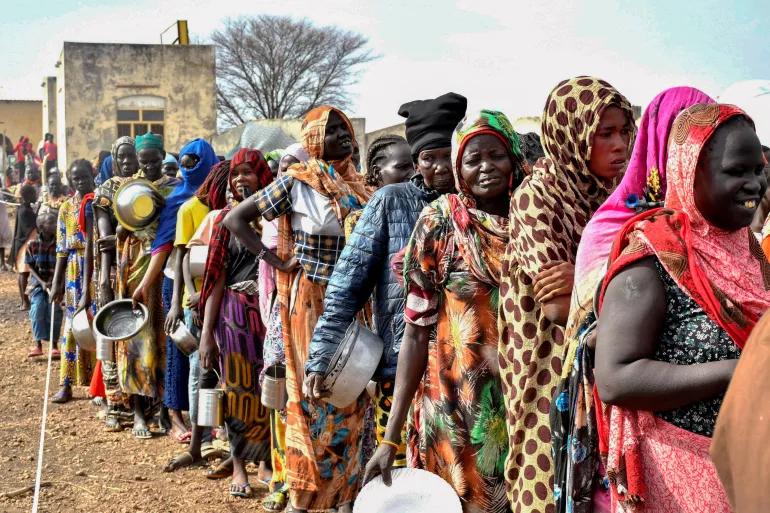
they all have sufuria for some reason
The structural weakness at the heart of the transition was visible from the outset. The Sovereignty Council created by the 2019 Constitutional Declaration gave the military co-equal status with civilian forces in the transitional government, a concession that proved fatal. The SAF under General Burhan and the RSF under General Dagalo (Hemedti) retained not only their armed forces but their extensive economic interests: gold mining operations in Darfur and Jebel Amir, trading networks extending across the Sahel, and parallel financial systems that had been built over decades of regime patronage.
These economic interests were never addressed in the transition framework. The international community, focused on the political architecture of the transition, treated the military's economic holdings as a secondary concern to be addressed after democratic consolidation. This was an essential misjudgement. For both factions, the transition represented a genuine threat to economic as well as political power, and their behaviour throughout the transition period reflected this.
The October 2021 coup, in which Burhan dissolved the civilian-led Sovereignty Council and placed the transition's civilian leaders under arrest, was widely portrayed as a sudden rupture. In retrospect, it was entirely predictable. The military had consistently resisted civilian attempts to establish accountability for human rights abuses, to reform the security sector, and to bring the RSF under formal military command. Each of these reform efforts threatened the economic and institutional autonomy that both factions had built under Bashir.
The Framework Agreement of December 2022, brokered by international mediators including the UN, the African Union, and IGAD, represented a serious attempt to restore the transition. But it suffered from the same structural weakness as its predecessor: it focused on political power-sharing arrangements without creating credible mechanisms to address the military's economic interests or to establish civilian oversight of the security sector. The agreement's collapse, and the outbreak of open fighting in April 2023, was not surprising to observers who had tracked the trajectory of negotiations.
The regional implications of the conflict have been severe. Sudan shares borders with seven countries, and the humanitarian consequences with over eight million displaced, one of the world's worst displacement crises have placed enormous pressure on neighbouring states. Ethiopia, managing its own internal conflicts, faces additional strain from Sudanese refugee flows. Egypt, with deep strategic interests in Nile water politics and historical ties to the SAF, has struggled to play a constructive mediating role. The Gulf states that is, UAE, Saudi Arabia, Qatar have competing economic and political interests that have complicated international responses.
The path to stabilisation is not clear. Any negotiated settlement will need to address questions that previous agreements avoided: the future of the RSF as a parallel military force, the disposition of military economic assets, accountability for atrocities committed during the conflict, and the relationship between Sudan's diverse regional constituencies and any future central government. These are not questions that lend themselves to rapid resolution. The international community's track record in Sudan suggests that sustained, patient engagement rather than the episodic crisis diplomacy that has characterised previous efforts will be required.